

Magnesium alloy die casting is suitable for making thin-walled parts. Its material characteristics and die casting process adaptability can meet the needs of lightweight and complex forming of thin-walled parts, and it is widely used in fields such as 3C and automotive.
The characteristics of magnesium alloy material support the production of thin-walled parts. Magnesium alloy has a low density (1.8g/cm ³), only 2/3 of aluminum alloy. When making thin-walled parts, it can significantly reduce weight (about 30% lighter than thin-walled aluminum alloy parts of the same size), and is suitable for the lightweight requirements of 3C products (such as laptop casings and phone frames). Magnesium alloy has good fluidity in the molten state (15% -20% higher than aluminum alloy), and can quickly fill thin-walled cavities (with a small thickness of up to 0.5mm) during die casting. After forming, the structure is uniform, avoiding defects such as material shortage and cold insulation. It is suitable for making thin-walled parts with fine structures (such as buckles and grooves on thin-walled parts).
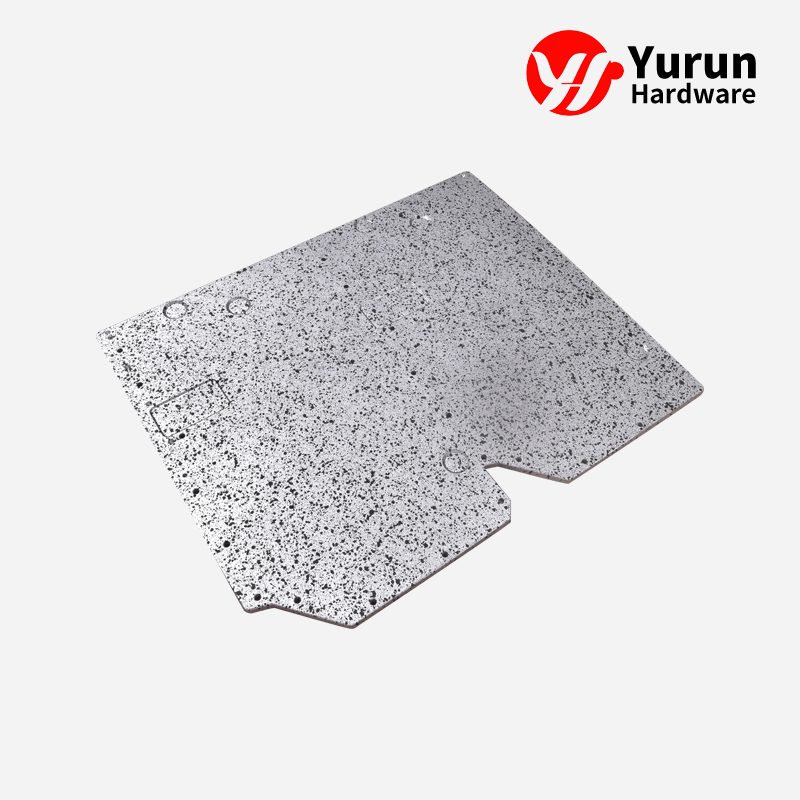
The types and thickness ranges of thin-walled components that are compatible are clear. The commonly used magnesium alloy die-casting thin-walled parts in the 3C field have a thickness of 0.5-2mm, such as the bottom shell of a 13 inch laptop (thickness 1.2-1.5mm) and the middle frame of a tablet (thickness 0.8-1.0mm). These thin-walled parts need to balance lightweight and structural strength. The tensile strength of magnesium alloy can reach 200-300MPa, which can meet the requirements of anti drop and anti deformation in daily use. Magnesium alloy die-casting thin-walled parts with a thickness of 1.5-3mm in the automotive field, such as car center control panel brackets (thickness 2.0-2.5mm) and motor end caps (thickness 2.5-3.0mm), can withstand slight vibrations around the engine while reducing weight.
Key process points ensure the quality of thin-walled components. High precision molds (processing accuracy ± 0.02mm) are required to produce thin-walled magnesium alloy die-casting parts, ensuring accurate cavity dimensions and avoiding uneven wall thickness (deviation should be controlled within ± 0.1mm). During die casting, it is necessary to control the injection speed (3-5m/s) and mold temperature (180-220 ℃). If the speed is too fast, it may cause burrs, and if it is too slow, it may lead to insufficient filling; Low temperature can affect the fluidity of magnesium alloys, while high temperature may cause mold sticking. After forming, deburring treatment (using laser or mechanical polishing) is required to ensure smooth edges of thin-walled parts and avoid scratching assembly personnel or other components with sharp parts.
Surface treatment enhances the durability of thin-walled components. The surface of magnesium alloy die-casting thin-walled parts is prone to oxidation and requires surface treatment, such as spraying (electrostatic spraying thickness of 30-50 μ m), anodizing (oxide film thickness of 5-10 μ m), to improve corrosion resistance (salt spray test can pass for 48-72 hours), and to adapt to humid environments (such as thin-walled parts of smart devices around bathrooms). Some thin-walled components (such as light luxury electronic accessories) can also be treated with wire drawing and sandblasting to enhance their appearance and texture.
Attention should be paid to adapting to scene limitations. Magnesium alloy die-casting thin-walled parts have limited temperature resistance (long-term use temperature ≤ 120 ℃) and are not suitable for scenarios near high-temperature sources (such as thin-walled parts near engine cylinder blocks). Thin walled components with high stress (such as load-bearing brackets) need to be reinforced with reinforcing ribs (width 0.8-1.2mm, height 2-3mm) to avoid deformation or fracture during use. When purchasing, it is necessary to clarify the usage scenarios and stress requirements of thin-walled parts with the manufacturer to ensure that the plan is compatible.