

High pressure and high speed "is the label of die-casting technology, but when it comes to numerical aspects, most people do not have a clear concept. We present the magnitude difference between pressure, speed, and production cycle using quantitative data.
1. Filling pressure: thousands of times difference from "self weight" to "hundreds of megapascals"
Pressure is the most essential characteristic of die-casting and the key to ensuring the density of castings.
Gravity casting: The filling pressure of the molten metal only comes from its own liquid column gravity, and the equivalent pressure is usually less than 0.01 MPa; Even in low-pressure casting, the auxiliary pressure is generally in the range of 0.05~0.1MPa, which only plays a role in smooth filling.
Pressure casting: divided into two stages: injection propulsion and pressure boosting and holding. The final pressurization and holding pressure of the cold chamber die-casting machine can reach 60-120 MPa, which is equivalent to bearing a pressure of 600-1200 kilograms per square centimeter, thousands of times higher than that of gravity casting.
For example, the tire pressure of a regular household car is about 0.25MPa, and the holding pressure of die-casting is equivalent to 240-480 times the tire pressure. Such immense pressure can not only force the molten metal to fill every fine structure of the mold cavity, but also continuously compensate for metal shrinkage during the solidification process, reducing shrinkage porosity and porosity defects from the root.
2. Charging speed: millisecond level charging from "slow flow" to "hundred meter per hour"
The filling speed directly determines the molding ability and is also the most intuitive difference between the two.
Gravity casting: The molten metal slowly flows into the mold cavity along the sprue, and the filling speed is usually less than 1m/s. A medium-sized shell component, the filling process takes 3-10 seconds, and it is easy to cool and solidify halfway when encountering thin-walled structures, forming defects such as cold insulation and insufficient pouring.
Pressure casting: The filling speed of the molten metal at the sprue can reach 30~70m/s, which is equivalent to a speed of about 108~252 kilometers per hour, equivalent to the operating speed of high-speed trains. For ordinary automotive motor housing and electronic control housing parts, it only takes 0.01~0.05 seconds from punch start to complete filling of the mold cavity, truly achieving millisecond level filling.
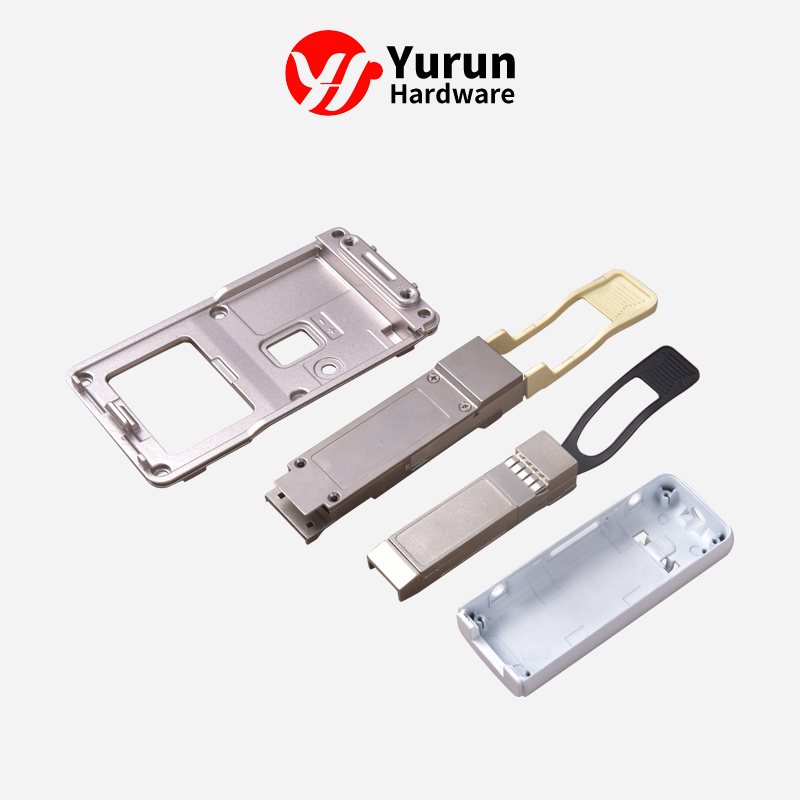
Due to its extremely fast speed, the metal liquid has already filled the entire mold cavity before it can cool and solidify. Therefore, die-casting can produce complex structures such as ultra-thin walls of 0.5mm, fine patterns, and micro buckles that cannot be formed by gravity casting.
3. Production efficiency: The difference in single cycle time can range from several times to tens of times
The advantage of pressure and speed ultimately leads to a huge gap in production efficiency, which is also one of the core commercial values of die-casting.
Gravity casting: including the entire process of manual pouring, cooling and solidification, mold extraction, and cleaning of the sprue. The cycle time of a single part is generally 3-15 minutes per piece, and the daily production capacity of a single mold is only tens to hundreds of pieces.
Cold chamber die casting (aluminum alloy): Fully automatic cycle production, with a single cycle time of about 60-120 seconds per medium-sized part, and a daily production capacity of thousands of pieces per equipment.
Hot chamber die casting (zinc alloy small parts): The cycle speed is faster, and small precision parts can reach 10-30 seconds per piece. A single device can produce tens of thousands of pieces per day.
Converted, the production efficiency of die-casting is 10-50 times higher than that of gravity casting for the same part size. This is also the core reason why die-casting is almost preferred for large-scale production projects.